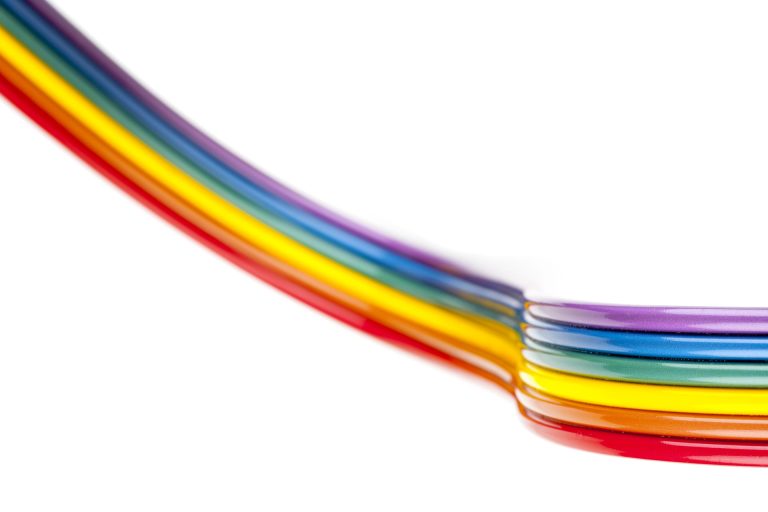
Ribbon cables are made by jacketing multiple legs in a single extrusion process creating a cable of high single dimension flexibility that has easily separated sub-components.
Used in industrial appliances and medical devices, ribbon cables are used to combine conductors and tubing together for a single device to avoid the possibility of tubes being crimped or pinched in a standard cabling operation.
Ribbon cables are also used in many worn applications such as headphones and other devices which take advantage of their improved flexibility, reduced size, and easy separation.
Extrudable Material Options & Performance Characteristics
New England Wire has the capability to manufacture ribbon cables with nearly all of our extrudable materials.
- Standard PVC is a very reasonably priced plastic that can be used as a flexible material with good flame retardancy
- Polyurethane is an excellent option for cables that will have to withstand large amounts of mechanical abuse
- TPE can be used as a cost-effective alternative in applications requiring improved flexibility over PVC
- Ribbon cable made with Silicone Rubber are the most flexible option offered with temperature ratings as high as 200°C
- For applications requiring advanced chemical resistance or higher voltages, ETFE can be used
Custom Tooling & Precision Extrusion Control
Using advanced fluid modeling techniques, custom tooling is designed and machined for each product. This custom tooling also allows for extremely precise dimensional control as well as guaranteeing the highest possible quality with excellent repeatability.
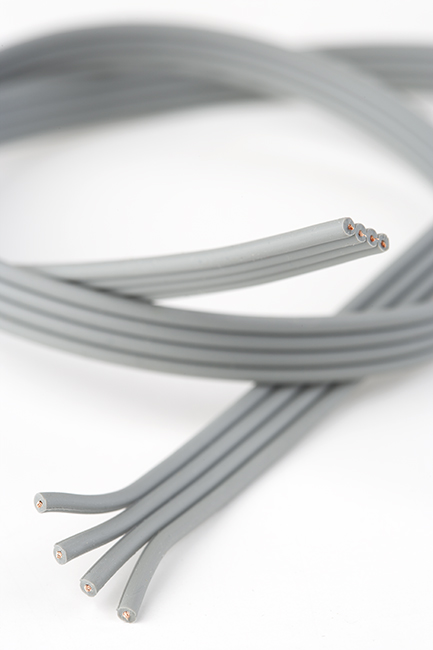
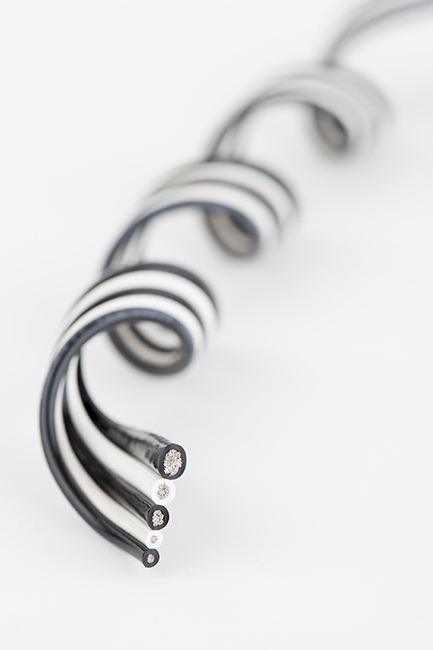
Engineers Ask: Ribbon Cables and Zip Cords FAQs
When is a flat configuration actually advantageous?
A ribbon configuration is advantageous when the cable needs to be laid flat in a channel or c-track, or whenever there is concern relative to introducing rotational twist.
Does ribbon cable take up less space?
A round cable with the same components will have a larger cabled diameter than that of any one component in parallel. However, the width of a ribbon cable will be wider than that of its cabled counterpart. If the application has a low profile, such as in a c-track channel, then a ribbon cable may build less.
Is a ribbon cable better for repeated bending?
A ribbon cable can be, but only in the right situation. When placed flat in a channel and bent across the wide profile of the cable, the zip cord or ribbon cable do very well with repeated bending. This is the greatest advantage of such cables and why they are often used in c-track applications for robotics. In a traditional round cable, the components not only see the stress associated with the bending but also additional stresses from the internal cabling, as components move and shift and generate friction and pinch points during repeated bending.
What’s the difference between ribbon cable and zip cord?
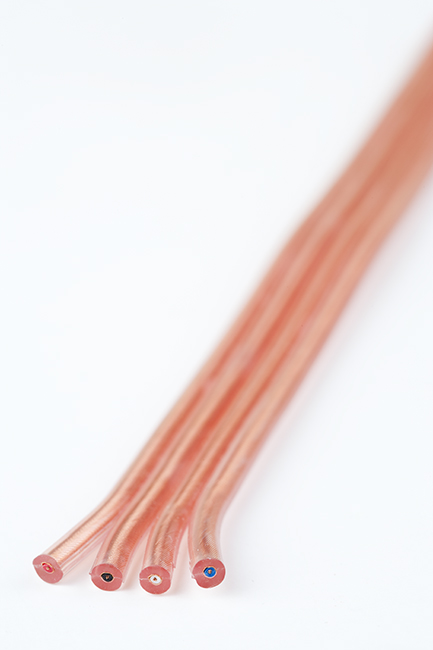
The terms can often be interchanged and can have overlapping characteristics. In general, a zip cord is two or more flexible conductors bonded or extruded in parallel that can be “zipped” apart or separated. A ribbon cable typically has many insulated conductors arranged in a wide, flat plane. Ribbon cables are usually not pulled apart and often terminated in the same ribbon configuration (think of a flat printer cable).
Can conductors, tubes, and other different components be combined in the same ribbon cable?
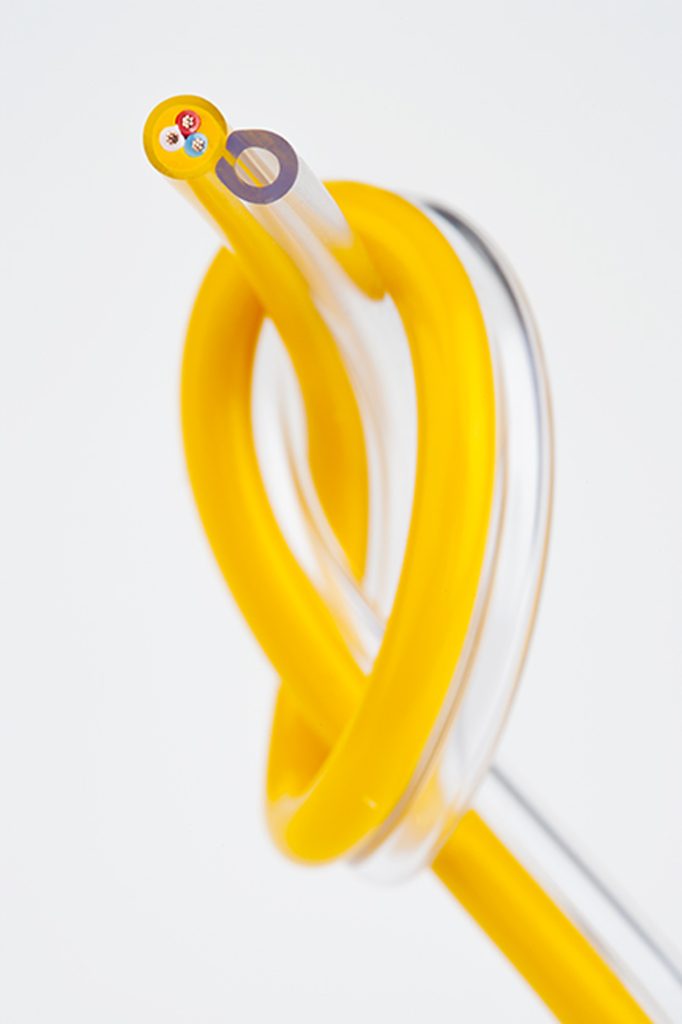
Generally speaking, yes. Different wire gauge sizes and materials can be incorporated as well as conductors of differing outer dimensions. Electrical conductors and shielded components can also be run side-by-side with tubing or fluid lines.