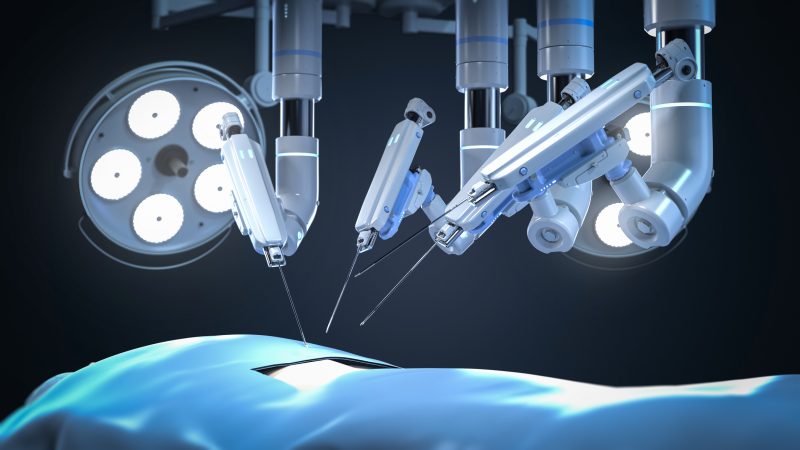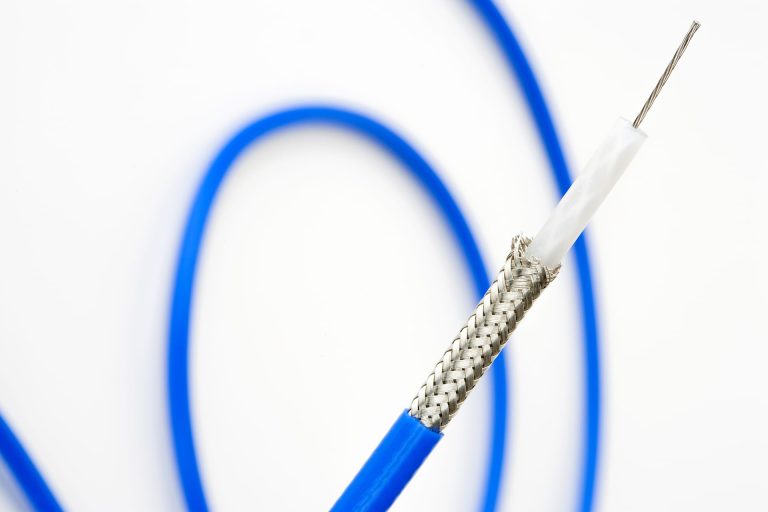
Coaxial cable applications range widely, from large CATV cables to ultra-small medical camera cables. Wherever a cable must be matched to a transmission system for data, audio, or video, New England Wire Technologies provides a solution. Whether the requirement is a standard 50-ohm coax or a fully custom design, we engineer, manufacture, and test each cable to precisely match the impedance, attenuation, and performance requirements of the system. Our test capabilities include frequency analysis up to 25 GHz, attenuation and impedance measurements, low-noise testing, and a broad range of additional electrical evaluations.
Conductor & Dielectric Options (NEWcel®)
We support fully custom coaxial designs using a wide selection of materials. Center conductors are available in copper or copper alloy, copper-clad steel, or steel, and may be solid, stranded, bunched, or rope-lay depending on the AWG size and application. Dielectric materials are typically polyolefin or fluoropolymer, offered in either solid or foamed constructions. Polyolefins are well suited for lower-cost, lower-temperature applications, while fluoropolymers provide higher temperature ratings and improved electrical performance at increased cost. Our proprietary foamed dielectric, NEWcel®, available in both polyolefin and fluoropolymer versions, delivers superior electrical performance through reduced dielectric thickness and improved velocity of propagation (VOP).
Shielding Layers & Jacket Options
Coaxial shielding options include wire and foil tape constructions. Wire shields may be spiral or braided and manufactured from copper or copper alloy for electrical conductivity, or steel for armored designs. Multiple shielding layers can be combined in various sequences to achieve specific design objectives such as flexibility, shield coverage, durability, and ease of termination. Jacket materials are selected to match application requirements and include PVC, TPU, TPE, polyolefin, fluoropolymer, and silicone rubber.
Impedance Targets & Low-Noise NEWtral® Integration
Coaxial cables can be designed to meet either impedance or capacitance targets, with typical values of 50 ohms, 75 ohms, or 30 pF/ft. Sizes range from 42–24 AWG for miniature and micro-miniature coaxes up to larger 1/0 AWG for high-power applications. Certain high-power coaxial designs incorporate Litz wire center conductors to reduce AC losses in high-frequency, high-power interconnections.
For applications where low-level signal integrity is critical, selected coaxial cables utilize our proprietary NEWtral® coating to minimize triboelectric noise.
Custom Transmission Line Engineering
We recognize the importance of transmission line performance in maximizing signal quality for high-frequency systems. Rather than adapting the system to a standard cable, we design and manufacture coaxial cables to match the characteristic impedance, capacitance, and attenuation requirements of each application. Standard coaxial cables for common use are also available and can be integrated into composite cable configurations.
Manufacturing Size Ranges & Precision Capabilities
Our broad manufacturing capabilities allow us to produce precision coaxial cables from ultra micro-miniature 50 AWG to 8 AWG and larger, in custom or standard configurations. Available constructions include shielded designs with round or flat braided wire, as well as spiral or foil-wrapped shields. We offer an extensive selection of dielectric materials, including polyolefin, polyethylene, polypropylene, and fluoropolymers such as ETFE, FEP, PFA, and PTFE (solid and low-density), along with custom dielectrics such as our proprietary NEWcel®.
Engineers Ask: Coaxial Cables FAQs
How do I know if I need a 50 Ohm or 75 Ohm coax? Or something else?
When selecting a coax, you will want to match the signal integrity of the coax to your connected device (like a receiver, transmitter, antennae, etc.). These devices are typically designed to a specific impedance which you will want to match to your coax.
What shielding construction is best for my application? Can I combine multiple layers?
There are a few factors to consider when selecting whether your coax should have a braided, spiral, or foil shield.
Shield selection varies based on the environment and application. This includes shield coverage, flexibility, termination, and more.
For example, if you are looking for the best EMI protection, a foil shield will be your best option. Spiral shields tend to be the weakest as they tend to have gaps between the shield conductors.
If flexibility is a concern however, a spiral shield may be ideal, and while a spiral can also have good flex-life if the application requires twisting or rotating a spiral shield will likely open and lose effectiveness. (What’s the difference between flexibility and flex life?)
Braided shields are relatively easy to terminate, less so than a spiral, more so than a foil, and braided shields offer superior performance for mechanical strength, and won’t act as an inductor at higher frequencies like a spiral shield can.
And in certain applications, it may be ideal to combine shielding types to optimize performance characteristics. Shielding with both a foil and a braid will provide superior shielding effectiveness, mechanical robustness, and improve ease of termination, for example.
To learn more about shielding, see these resources:
What is triboelectric noise, and what causes it?
Triboelectric noise is essentially the buildup of static electricity resulting from the conductor rubbing against the insulation. This occurs when the coaxial cable moves, flexes, bends, or exposed to vibration. The triboelectric noise or build up static electricity travels through the cable and interferes with primary signal. For signal sensitive applications even this small amount of interference can distort data collection.
Can coaxial cables be designed for low-noise or motion sensitive applications?
Yes, a coaxial cable can be designed for low-noise or motion sensitive applications. When the application requires precise signal integrity without interference from outside signals, a low-noise construction may be ideal.
Applications that may benefit from a low-noise coax include:
- Medical Instrumentation: Used in ECG, EEG, and pulse oximetry leads where patient movement can’t be avoided.
- High-Precision Sensors: Used with piezoelectric accelerometers, strain gauges, and charge-measuring devices.
- Research & Laboratories: Essential for ultra-low current/voltage testing, cryogenic transport, and ion chamber measurements.
- Audio and Broadcast: Used for high-end microphones and broadcast cameras to prevent “handling noise” when the cable is moved.
How does the low-noise coax work?
To reduce triboelectric noise, a semi-conductive layer is added between the dielectric layer and shield layer of the coax. This bonded layer reduces the contact between two dissimilar materials and limits the build-up of the triboelectric charge, while also providing a path to dissipate any charge instantly.
In addition, material selection, as well as implementing other mechanical dampening techniques can be employed, whether for a single low-noise coax, or several coaxes in a multi-conductor cable.
To learn more about low-noise coaxes and cables, see this video: