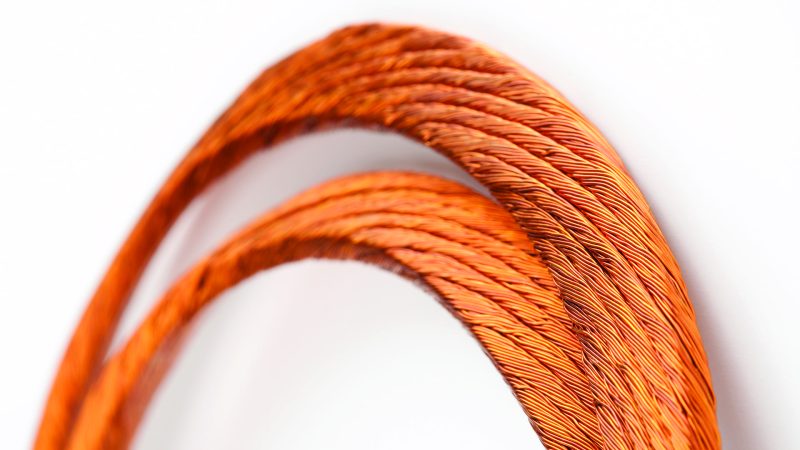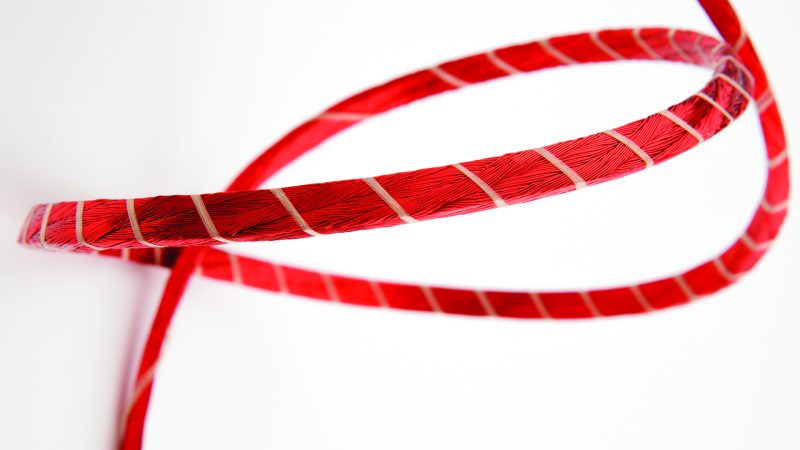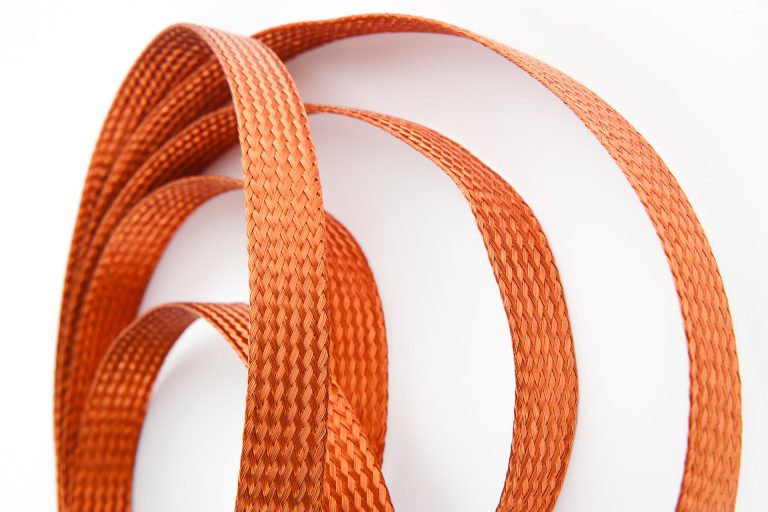
New England Wire Technologies custom manufactures flat and extra wide braids engineered for low-inductance grounding, high-current bus bar interconnects, and high-frequency RF shielding.
Custom Flat Braid Configurations & Dimensions
Most constructions can be supplied with textile serves or braids, tape layers or outer extruded insulations. Due to the inherent properties of braids, dimensions may vary; we manufacture to width specification. Thickness measurements are given for reference only. If your application requires a specific thickness, please consult with one of our design team members.
- Conductor Materials: Bare copper, tinned copper, silver-plated copper, nickel-plated copper, stainless steel, and specialty high-temperature alloys.
- Custom Width & Thickness Controls: Precision-manufactured to custom width specifications with options for specialized thickness tolerances.
- Insulation & Jacket Options: Textile serves/braids, high-temperature film/tape layers, or custom extruded thermoplastic and silicone jackets.
Extra Wide Braids for High-Current Applications
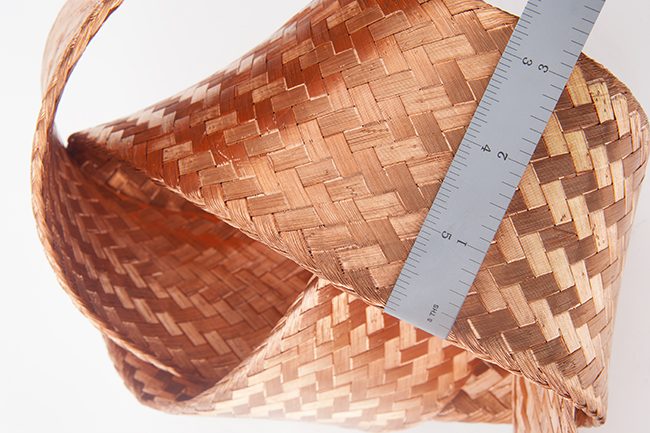
These braided constructions have widths that exceed those of standard flat braid constructions. New England Wire Technologies manufactures wide braids usually from either bare copper or tinned copper but silver-plated copper, nickel plated copper, stainless steel or other metals can be utilized. A typical application for wide braids are bus bar applications where large flexible interconnects are required to withstand high currents.
- Primary High-Current Uses: Flexible bus bar interconnects, automotive and aerospace chassis grounding, high-frequency antenna/broadcasting leads, and heavy lightning protection systems.
Engineers Ask: Flat and Wide Braids FAQs
Why would I choose a flat braid instead of stranded wire?
Several electrical and mechanical reasons exist why a flat braid might be better than a stranded or ropelay conductor. Flat braids can offer superior flexibility, both during installation and in application. Flat braids also compress easily, allowing them to conform to a given surface and create a low profile. This allows for good surface contact, strengthening both the electrical and mechanical termination. From an electrical standpoint, flat braids are wider than ropelays, with larger surface area, allowing for better high-frequency shielding. The woven pattern of a braid is also better for minimizing inductance, whereas a twisted ropelay conductor increases inductance.
Does a flat braid reduce stress caused by vibration or thermal expansion?
Yes, while ropelay conductors are flexible they don’t handle vibration well. In addition, at the termination point of a ropelay conductor the wires are forced out of configuration causing a stress point for fatigue and failure. A flat braids woven pattern allows the wires to move with little disruption during vibration, as well as evenly distribute mechanical stresses, which limit work-hardening and wire fatigue.
Which applications benefit the most from flat braids?
Chassis and hinged doorway grounding application for automotive or aerospace are ideal applications for flat braids. The low profile allows for easy maneuverability and termination to the metal chassis. Flat braids also handle the extreme, continuous structural vibrations these applications demand.
Flat braids are also beneficial in high frequency applications using RF transmitters and antennas such as radar, broadcasting equipment, radio and more. The large surface area of a flat braid provides a natural pathway to minimize skin effect, allowing current to dissipate along the outer surface of the braid.
Flat braids are also an excellent choice for power distribution and grounding. Again, the large surface area and low inductance can handle massive voltage and current loads. This makes them a wise choice for grounding and lightning protection, and high current applications such as busbar connections.