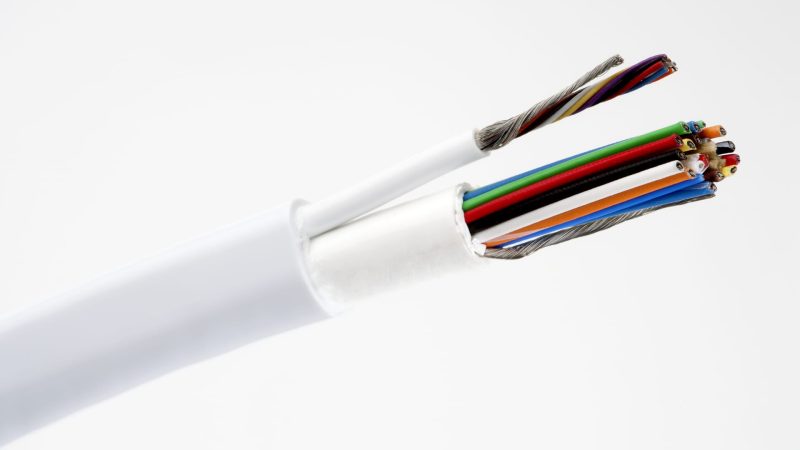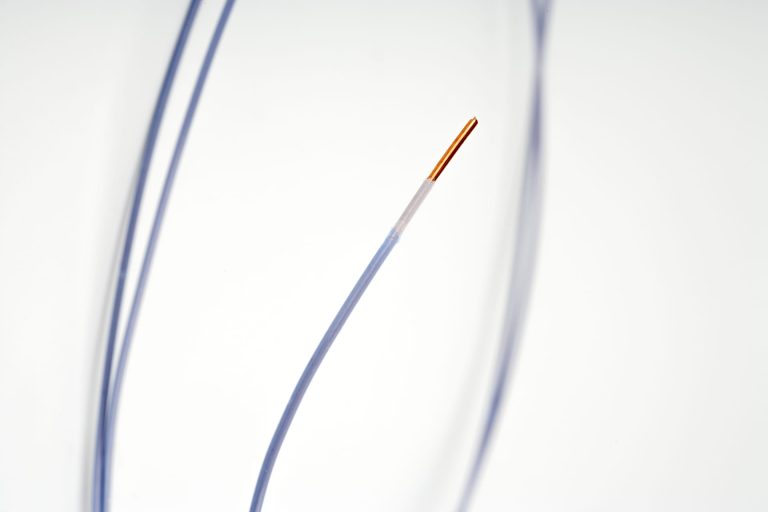
New England Wire Technologies manufactures winding wire in single-end, stranded and Litz wire multi-conductor cable configurations. While magnet wire in the single-end or Litz wire form is the most common winding wire, its coating has been found to be susceptible to insulation loss between winding turns, separate windings and between the winding and the ground.
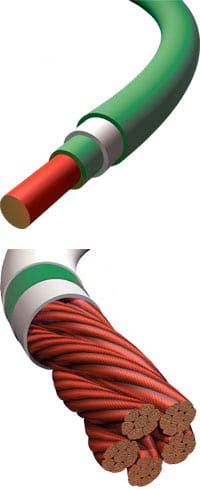
NEWind® multi-layer insulated winding wire solves this problem by insulating the conductors with multiple thin layers of insulation. NEWind® wire insulation layers are commonly extruded in single, double (supplementary), or triple (reinforced) layers that can reduce creepage and clearing distances. The result is motors and transformers that can be manufactured without additional insulation, thus reducing their cost and size.
Agency Approvals & Standards Compliance
- UL 2353 OBJT2 E205791
- UL OBMW2 E132708
- UL 60950 Annex U
- UL 1446 Electrical Insulation System
- NE-F1 Class F (155°C)
- OBJS2 File E231977
- IEC 60085
- CSA C22.2 No. O-M91, Appendix B
- UL/IEC 60601-1
- IEC 62368-1, Annex J
- IEC 615581-1, -2-16, Annex K
The following lists some of the more common material options to assist with developing your cable.
Insulation Material Specifications
- PFA (Class H – 180°C)*
- FEP (Class F – 155°C)
- ETFE (Class F – 155°C)
| Property | ETFE | FEP | PFA |
|---|---|---|---|
| Temperature Rating | Class F 155°C | Class F 155°C | Class H 180°C* |
| Layer Thickness (Minimum) | 0.001″ | 0.0015″ | 0.001″ |
| Total Thickness Supplementary (Minimum) | 0.002″ | 0.003″ | 0.002″ |
| Total Thickness Reinforced (Minimum) | 0.003″ | 0.0045″ | 0.003″ |
*per UL 2353 260°C heat shock
Conductor Materials:
- Bare Copper
- Oxygen-Free Copper
- Tinned Copper
- Silver-Plated Copper
- Nickel-Plated Copper
- Magnet Wire
- Wide Variety of Alloys
Insulation Colors:
- Clear
- White
- Black
- Red
- Green
- Yellow
- Blue
- Brown
- Orange
- Gray
- Violet
Common usage/industries:
- Power conversion
- Motors
- Domestic appliances
- Transformers
- Automotive
- Relays
- Solenoids
- Electromagnets
- Inductors
- Control devices
- Medical/Dental
- Renewable energy
- Telecom
Engineers Ask: NEWind® Double & Triple Insulated Winding Wires FAQs
What does “supplementary” insulation actually mean?
Supplementary insulation means two layers of insulation, or double insulation. It is a distinct second layer from the primary layer, and there to provide protection should the primary layer become damaged.
What does “reinforced” insulation mean?
Reinforced is basic insulation plus supplementary insulation, or essentially triple layer. This has built-in redundancy to protect from high-voltage shorts. As such, safety agencies considered reinforced insulation, having three separate insulation layers, as a complete, self-contained system, without needing additional barrier tapes in the winding.
Can triple-insulated wire eliminate other insulating barriers?
Yes, triple-insulated wire ensures that if any single layer is damaged the remaining two layers still provide supplementary insulation. The insulation allows for the primary and secondary winding to interweave, or come in contact, thus eliminating the need for traditional insulation separators and barriers.