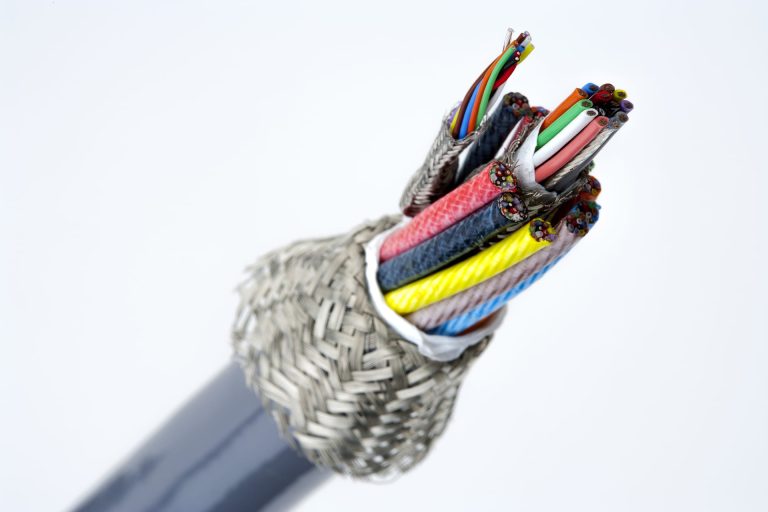
We draw on our broad range of manufacturing capabilities and in-depth knowledge of conductor and insulation materials to design and manufacture custom cables that deliver precisely what you’re looking for – low noise, high flexibility, extended flex life, miniaturization, high/low temperature performance or resistance to oils and corrosive chemicals with short lead times, rapid prototyping and unparalleled customer service.
Micro and Miniature Cables
New England Wire Technologies has the capability to extrude insulation over conductors as small as 46 AWG and to strand individual wires as small as 52 AWG.
These miniature and micro-miniature conductors are integrated to create high performance cables for ultrasound probes and other applications requiring minimum overall diameter.
Custom Conductor & Hybrid Layup Options
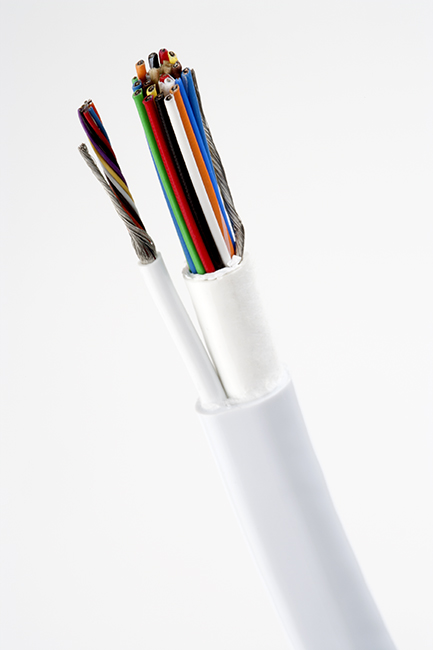
Need an exact strand diameter or a ½ AWG size? We have mixed strand sizes and materials in finished strand to meet a highly defined criteria set of diameter, tensile strength and conductivity. With a wide variety of conductor materials, plating materials, and copper alloys we can design to meet any number of performance requirements like flex-life, temperature, or electrical criteria. Mixed multiple single end AWG sizes and planetary cabled zip cords around a core are just a couple of the unique ways we can construct cable to meet desired function.
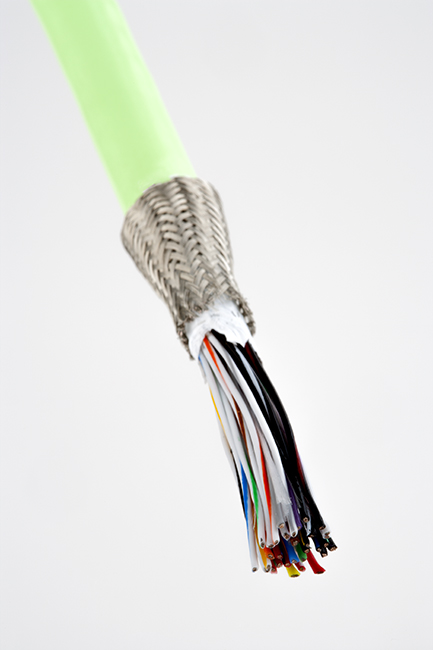
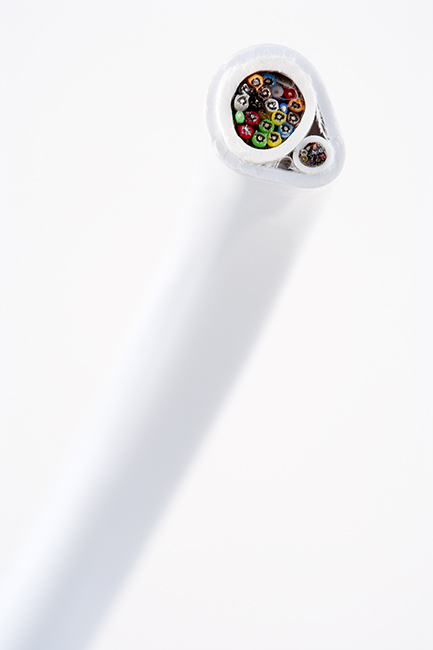
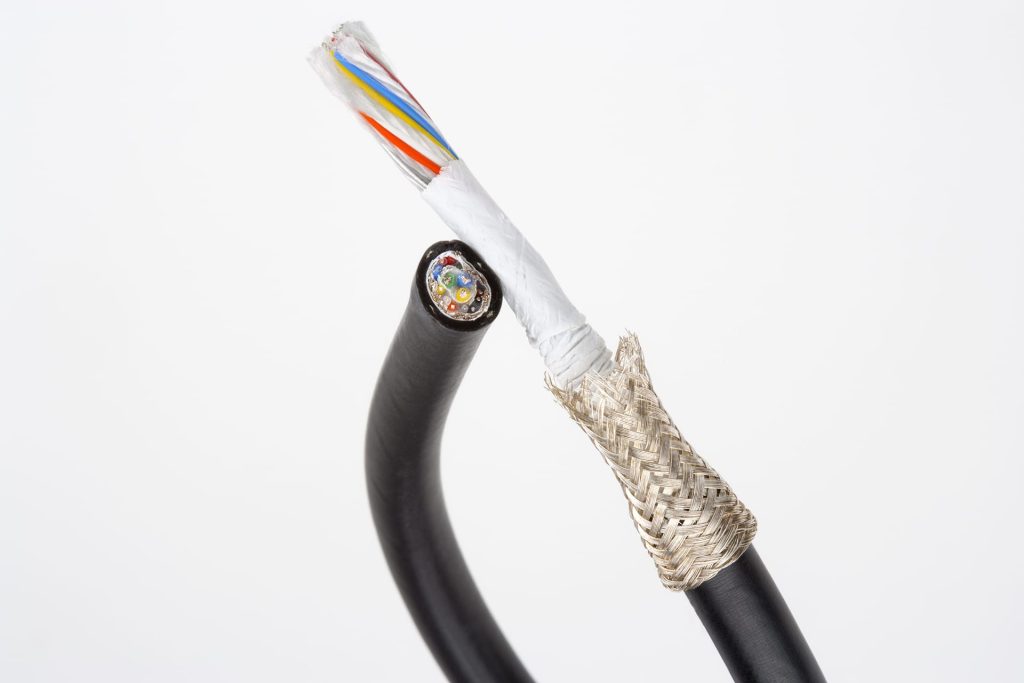
Whether your multi-conductor cable is two-conductors, or a hundred conductors with same size conductors, or a mixed AWG sizes and sub-cables, we’ve got you covered. Tapes and shields can also be added to isolate sub-cables, barrier layers, shield EMI, improve aesthetics, and more.
Custom Color Matching & Cable Marking Services
Our development lab stocks a wide range of color concentrates for numerous extruded insulations. In addition, we also maintain a huge inventory of non-standard color concentrates for targeted color matching to a customer-supplied physical target and/or to established colors from our Pantone, RAL, Munsell and Federal Standard library. Depending upon your requirements, we offer HMF (heavy metal free), RoHS, REACH, FDA, USP VI, ISO 10993-compliant color concentrates.
We also offer a complete range of printing services including print wheel and ink jet printing. Our custom services can be used to imprint cable with your company name and logo or to meet requirements of UL/CSA. Custom ink colors are available for most applications as well.
Engineers Ask: Multi-Conductor Cable FAQs
How do I determine the best cable construction for my application?
That’s a big question. Each custom multi-conductor cable is going to be designed for a certain application. The key is to blend design considerations together to optimize critical performance criteria. That means thinking about material selection, combining dissimilar components, cable configuration, environmental conditions, electrical requirements, cost, and many other factors. This likely means there will be some trade-offs. For example, if you need high temperature, the cable might be more expensive due to materials, or if the final diameter is non-negotiable then flexibility may be reduced. While hypothetical, these considerations just need to be considered up front in the design process.
When should I use a custom multi-conductor cable instead of multiple individual cables?
There are several scenarios where a multi-conductor cable might make more sense than a bunch of cables, or a harness. For example, if you’re dealing with extreme conditions – whether that be temperature or voltage requirements – investing in one specialized cable jacket for protection will be more cost effective than using the same material on multiple cables. Often applications require power, signal, and/or other features that can be grouped together under one jacket in a multi-conductor cable. This allows for a single installation and one that is easier to route than many cables or a loose harness. Multi-conductor cables also offer better mechanical strength in terms of cut resistance and pushability over harnesses. Voltage shock can also be minimized with a multi-conductor versus a bundle of loose cables (see this video).
How do shielding, fillers, tapes, and separators improve cable performance?
Each component serves a unique purpose in a multi-conductor cable. Shields help block outside electrical interference, fillers improve cable layup, roundness, and overall aesthetics, while tapes and separators usually help isolate sub-cables for routing, or act as barriers, helping to protect each grouping, or ease insulation stripping.